



RBC taps Loblaw, Dollarama as 2026 best ideas
 Tweet
Tweet Share
Share E-mail
Get Alerts L Hot Sheet
Join SI Premium – FREE
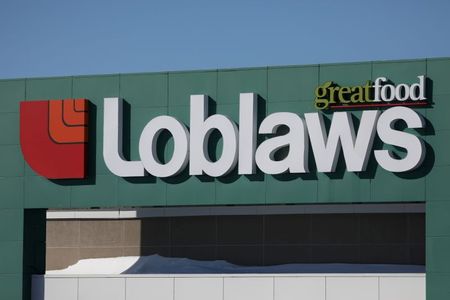
The Canadian consumer will remain firmly focused on value in 2026, forcing investors to favor predictable growth and quality over deep-value plays, according to a recent research note from RBC Capital Markets. The firm’s analyst, Irene Nattel, maintained a "cautious outlook" on household spending, emphasizing that the economic recovery continues to be bifurcated, a "k-shaped recovery" that benefits high-income earners while lower-income cohorts struggle with persistent inflation.
RBC Capital Markets has named Loblaw Companies Limited (TSX: L) as its overall best idea, arguing the retail giant is exceptionally well-positioned to capitalize on evolving value trends, closely followed by Dollarama Inc (TSX: DOL) as the firm’s top quality growth pick.
The Two-Tiered Economy: Wealthy vs. Struggling
RBC’s 2026 Canadian Consumer Outlook hinges on the reality that spending growth will be modest, driven by a consumer who, despite solid overall household balance sheets (notably among wealthier groups), is prioritizing thrift.
While higher-income households see improved balance sheets thanks to easing mortgage renewal headwinds and strong financial markets, lower-income groups are dedicating a rising proportion of their budgets to essentials like food and shelter.
“Our positioning for 2026 is broadly consistent with the dominant post-pandemic theme: against the backdrop of muted and value-oriented consumer spending, our primary focus remains on secular winners with sustainable, ratable growth,” the report states.
This environment reinforces five key themes shaping the retail and consumer sector:
Value is Paramount: Financial pressures necessitate that all income levels prioritize value, benefiting retailers with strong value propositions and private-label penetration.
Inflationary Trade-Downs: Elevated costs in essentials drive ongoing consumer "trade-down" in channels and categories, maintaining rational but high promotional intensity.
Flight to Quality: Investors are shunning deep value, instead favoring quality and momentum in structural winners that capture a larger share of the consumer wallet.
Brand Trust: Social-driven interactions and strong brand communities are becoming critical "trust agents," driving spending allocation, particularly in discretionary categories like beauty and apparel.
AI as a Revenue Stream: Companies leveraging AI and large data pools for hyper-personalized experiences and retail media are unlocking new revenue streams and competitive advantages.
Top Stock Picks
RBC has narrowed its best ideas list, focusing on companies that can thrive in a value-conscious setting or that offer predictable, high-quality growth:
Overall Best Idea: Loblaw - As a dominant retailer and clear leader in food (specifically discount and private label) and pharmacy, Loblaw is "exceptionally well-positioned to capitalize on current and evolving trends."
Best Quality Growth: Dollarama - RBC believes Dollarama is uniquely positioned to continue gaining share of wallet. The firm notes its valuation should stabilize toward the high end of its long-term range as investors seek "refuge in ratable, predictable, and sustainable growth stories."
Best Large-Cap Re-rating: Alimentation Couche Tard Inc (TSX: ATD) - The fuel and convenience store giant is cited as one of the few large-cap laggards with a compelling valuation. RBC sees recent KPI improvements as a "precursor to higher investor conviction" and potential re-rating, noting the company’s significant balance sheet capacity for growth.
Best Mid-Cap/Discretionary Idea: Aritzia Inc (TSX:ATZ) - Despite the cautious discretionary environment, Aritzia is highlighted for its significant momentum and runway in the U.S., with accelerated growth expected post-Fiscal 2026.
In the small- to mid-cap space, Pet Valu Holdings Ltd (TSX:PET) is noted as a strong self-help and potential re-rating idea, underpinned by sector-leading Return on Invested Capital (ROIC) and Free Cash Flow (FCF) conversion.
The report concludes that while a gradual improvement in unemployment should support spending power, the bias remains toward value-seeking behavior, cementing the strategic advantage for retailers who dominate the essential and discount channels.
You May Also Be Interested In
- Applied Materials posts record Q3 revenue as AI demand boosts chip equipment sales
- Yeti raises full-year EPS outlook after Q2 earnings beat
- Exclusive: BitGo says institutional conversations are shifting to tokenization
Create E-mail Alert Related Categories
General News, InvestingSign up for StreetInsider Free!
Receive full access to all new and archived articles, unlimited portfolio tracking, e-mail alerts, custom newswires and RSS feeds - and more!
